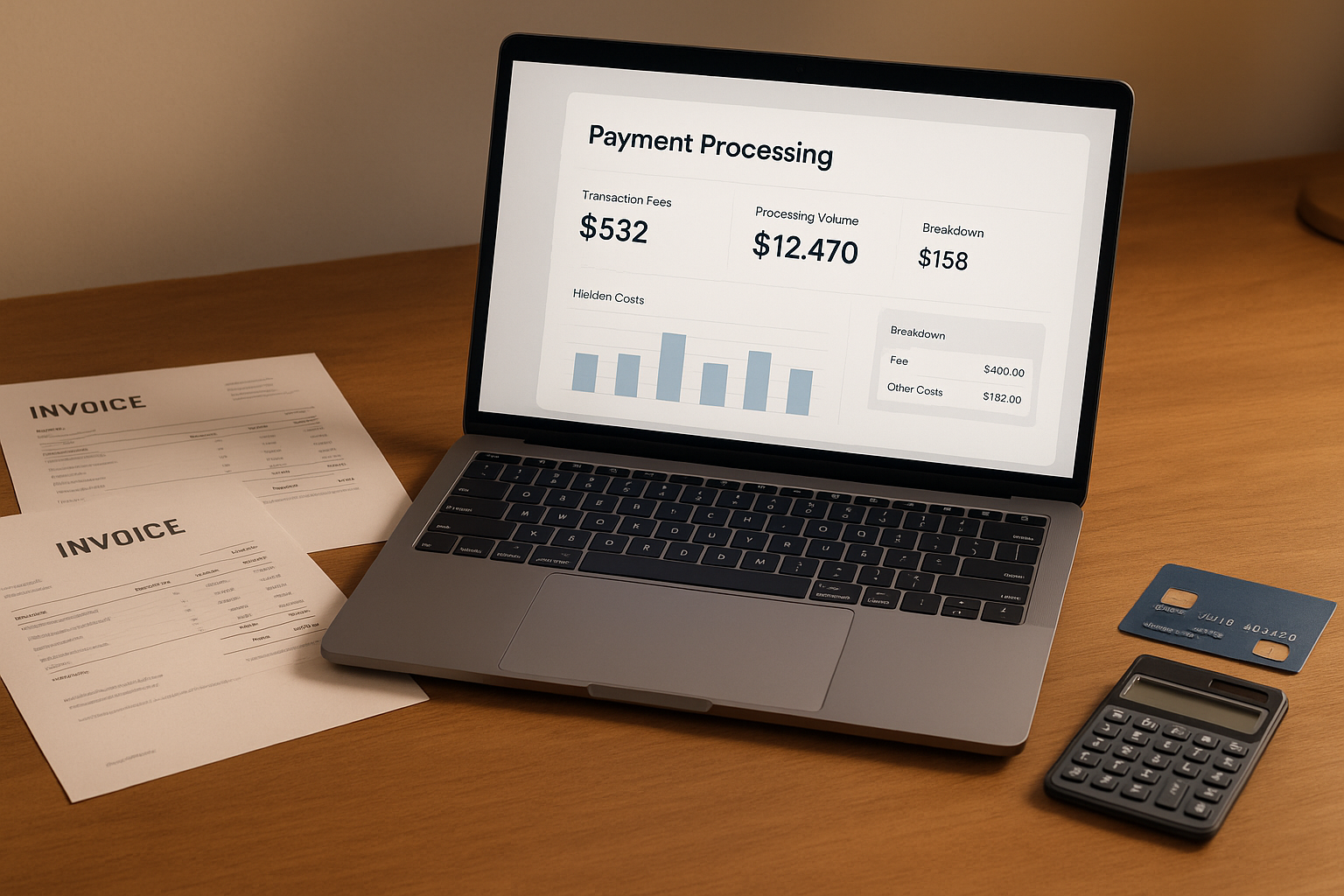
Every electronic payment you process comes with fees – some obvious, others not so much. These charges can significantly impact your bottom line if you’re not careful. Here’s what you need to know:
- Transaction Fees: Typically, 2.9% + $0.30 per transaction, combining a percentage of the sale and a flat fee.
- Interchange Fees: Set by card networks (e.g., Visa, Mastercard), ranging from 1.4% to 3.5%, depending on factors like card type or transaction method.
- Additional Costs: Monthly fees, PCI compliance charges, chargeback fees, and equipment rentals can add up.
- Pricing Models: Flat-rate pricing is simple but often pricier. Interchange-plus offers transparency, while subscription models work well for high-volume businesses.
To save money, review your statements for hidden fees, negotiate processor markups, and choose a pricing model that fits your needs. Avoid contracts with unclear terms, and prioritize transparency in your payment processing setup.
Types of Transaction Fees
When you process payments, multiple players are involved, each taking a slice of the transaction cost. Knowing the different types of fees can help you identify where your money is going and find ways to reduce unnecessary charges. Here’s a closer look at the key fee types and how they influence your total processing costs.
Interchange Fees
Interchange fees make up a large portion of payment processing costs. These fees are set by card networks like Visa and Mastercard and are influenced by several factors, including:
- Card type: Basic debit cards usually have lower fees compared to premium rewards cards.
- Transaction method: In-person (card-present) transactions typically cost less than online or phone (card-not-present) transactions.
- Merchant category: Certain industries may face higher or lower rates.
- Transaction size: Larger transactions can sometimes have a different fee structure.
- Settlement timing: Delayed settlement might incur higher fees.
Since these fees are standardized across the industry, businesses generally cannot negotiate them individually.
Markup Charges and Monthly Fees
On top of interchange fees, payment processors add their own markup charges. These markups, which vary by provider, cover processing and service-related costs and are often applied per transaction.
Most processors also charge monthly fees for services like reporting tools, customer support, and fraud protection. You might encounter additional charges for:
- Payment gateway access
- Equipment rentals
- Statement production
- Batch processing
In some cases, meeting a minimum processing volume could help reduce or eliminate certain monthly fees.
PCI Compliance and Additional Fees
Staying compliant with PCI DSS (Payment Card Industry Data Security Standards) is essential for safeguarding customer payment information, but it comes with its own costs. Regular compliance fees are common, and failing to meet these standards can lead to hefty penalties and increased liability risks.
Other fees to watch for include:
- Chargeback fees: Applied when a customer disputes a transaction.
- Fraud prevention fees: For services like address verification (AVS) and CVV checks.
- Early termination fees: Charged if you end your contract early.
- International transaction fees: Additional costs for cross-border payments or currency conversions.
Understanding these fees can help you better manage your payment processing expenses and avoid surprises down the line.
Payment Processing Pricing Models
Understanding the different pricing models offered by payment processors is key to managing your overall costs. Each model impacts your expenses differently, so knowing how they work can help you make the best financial decision for your business.
Flat-Rate vs. Tiered Pricing
Flat-rate pricing is straightforward. It charges a fixed percentage and fee for every transaction, no matter the card type or how the transaction is processed. For instance, a processor might charge 2.9% + 30¢ for card-not-present transactions. While this model is predictable and easy to understand, it often includes a premium to account for higher interchange fees.
Tiered pricing, on the other hand, categorizes transactions into tiers like qualified, mid-qualified, and non-qualified, each with its own rate. For example, a qualified transaction might cost 1.69%, but a mid-qualified one could jump to 2.50%. The catch? Processors decide how transactions are categorized, and their criteria aren’t always transparent. Because of this lack of clarity, experts often discourage using tiered pricing.
Other pricing models strike different balances between transparency and predictability.
Interchange-Plus and Subscription Models
Interchange-plus pricing is known for its transparency. It breaks down costs into the interchange fee (set by card networks) and a fixed markup added by the processor. Interchange fees vary widely based on card type and transaction method. For example, Visa’s fees range from 0.05% + $0.22 to 2.40% + $0.10, while Mastercard’s range from 0.05% + $0.21 to 1.76% + $0.20. Since interchange fees are non-negotiable, the processor’s markup becomes the deciding factor for costs.
Subscription-based pricing combines a fixed monthly fee with lower per-transaction costs. For example, Stax offers plans starting at $99 per month, allowing merchants to access interchange rates without additional percentage markups. This model offers excellent cost predictability, making it appealing for businesses with high transaction volumes or SaaS platforms that value consistent monthly expenses.
Here’s a quick comparison of these pricing models:
Pricing Models Comparison Table
| Feature | Flat-Rate | Interchange-Plus | Tiered | Subscription |
|---|---|---|---|---|
| Transparency | Medium – single rate without a breakdown | High – detailed breakdown of costs | Low – unclear tier categorization | High – clear rates and fixed fees |
| Simplicity | High – easy to understand | Moderate – requires understanding fee structures | Low to moderate – tier rules are complex | High – straightforward monthly costs |
| Cost Predictability | High – consistent per-transaction fee | Variable – depends on card type | Low – influenced by tier qualifications | High – fixed monthly budgeting |
| Best For | Small businesses and startups | Businesses that value transparency | Not generally recommended | High-volume merchants and SaaS platforms |
| Typical Costs | 2.6% – 2.9% + $0.10–$0.30 | Interchange + ~$0.10 markup | 1.69% – 2.50%+ (varies by tier) | $99+ per month plus lower transaction fees |
Flat-rate pricing works well for small businesses or startups that prioritize simplicity and predictable costs, even if the fees are slightly higher. Interchange-plus pricing appeals to businesses that need transparency, while subscription-based pricing is ideal for high-volume merchants and platforms aiming for steady, predictable expenses.
sbb-itb-8c45743
Finding and Reducing Hidden Costs
Hidden fees can quietly chip away at your profits. The key to protecting your bottom line? Spotting and eliminating them.
How to Find Hidden Fees in Statements
Merchant statements often hide fees in plain sight, using vague or confusing language. Carefully review each line item, paying close attention to descriptions like "processing fees", "service charges", or "miscellaneous costs." These terms may disguise extra markups added on top of standard interchange fees. Also, look for monthly charges tied to services you don’t actually use, such as statement fees, gateway fees, or compliance charges.
Be especially cautious with PCI compliance fees – they’re sometimes inflated. If the charges seem unusually high, ask for a detailed breakdown.
Another red flag is the presence of duplicate fees. For instance, batch fees or authorization fees might be bundled into your total processing costs without a clear explanation. Additionally, if you notice transactions being shifted into higher-cost tiers without justification, it’s worth investigating further, as this could indicate inflated rates.
How to Negotiate Lower Fees
Once you’ve identified hidden fees, it’s time to tackle them through negotiation.
Start by pinpointing which fees are negotiable. While interchange and assessment fees are set by card networks and non-negotiable, the markup added by your processor is fair game. Focus your efforts on reducing this markup to cut costs.
If your business processes a high volume of transactions – typically between $5 million and $250 million annually – you’re in a strong position to negotiate lower rates. Processors view high-volume merchants as lower-risk, long-term clients, which gives you leverage. Smaller businesses can also succeed in negotiations by coming prepared. Know your monthly transaction volume, average transaction size, and the types of cards you accept before entering discussions.
Consider requesting interchange-plus pricing during negotiations. This pricing model separates interchange fees from processor markups, offering greater transparency and making it easier to identify where you can save.
Lastly, review your contract terms carefully. While longer contracts might secure better rates, weigh this against the flexibility to switch providers if a better deal comes along. Gathering multiple quotes can also strengthen your negotiating position.
Secured Payments Solutions and Cost Reduction
After addressing hidden fees and negotiating better rates, the next logical step is to team up with a payment provider that prioritizes transparency. Once you’ve identified unnecessary charges and secured fair pricing, choosing a transparent payment processor can ensure long-term savings. This builds upon the earlier discussion about the value of proactive fee negotiation.
Secured Payments Features and Services
Secured Payments offers a comprehensive range of solutions for handling in-person, online, and ACH transactions. Their services cater to a variety of needs, including high-risk industries, e-commerce businesses, and payment facilitation, all of which can integrate seamlessly with your existing systems.
For industries like CBD, adult entertainment, and subscription services – where chargeback risks tend to be higher – Secured Payments provides specialized high-risk merchant account services. Their credit card processing supports both in-person and online payments, while ACH transfers offer a budget-friendly option for recurring or high-value transactions.
Online businesses can take advantage of their e-commerce payment processing, which includes multi-currency support and fraud detection tools. Additionally, they provide payment facilitation and card issuance services, enabling platforms to manage sub-merchant accounts with ease. To help businesses further, their consulting services offer tailored advice on optimizing payment strategies and minimizing processing costs.
Custom Pricing and Transparency
Secured Payments stands out with its commitment to custom pricing and upfront clarity. They provide a detailed breakdown of all costs, separating interchange fees from markups, so businesses know exactly what they’re paying for. Plus, they guarantee competitive rates by matching valid quotes and offering volume-based discounts as your business grows.
Their pricing model adapts to your transaction volume and risk profile. High-volume merchants can unlock savings through volume discounts, while smaller businesses avoid overpaying. Expert consulting services also help identify inefficiencies and implement cost-saving strategies, ensuring businesses only pay for what they truly need.
Secured Payments Plan Options
| Plan | Best For | Key Features | Pricing Structure |
|---|---|---|---|
| Basic Merchant Plan | Retail and service businesses | Credit card processing, ACH transactions, in-person payments, 24/7 support | Custom pricing |
| High-Risk Plan | High-risk industries (e.g., CBD, adult, subscription) | High-risk payment processing, fraud prevention, and chargeback management | Custom pricing |
| E-Commerce Plan | Online retailers and digital businesses | E-commerce payment processing, multi-currency support, and fraud detection | Custom pricing |
| Consulting Services | Businesses seeking payment optimization | Payment strategy consulting, platform selection, cost reduction advice | Custom pricing |
Each plan is designed with a transparent fee structure and no hidden charges. This ensures businesses only pay for the services they require, making it easier to scale without unexpected costs.
Conclusion: Reducing Payment Processing Costs
For any business handling electronic payments, understanding transaction fees and hidden costs is crucial. A clear grasp of your fee structure helps you avoid expensive mistakes and better manage your budget. The strategies outlined here build on earlier discussions about fee types and pricing models, offering actionable steps to keep costs in check.
Start by familiarizing yourself with the charges you face, monitoring fees regularly, and choosing a processor that provides transparency. While interchange fees are non-negotiable, you can control costs by focusing on markup, monthly charges, and other service fees. Always request detailed breakdowns that separate interchange fees from markups – this clarity makes budgeting much easier.
Make it a habit to review your monthly statements. This helps you spot and dispute unclear or unexpected fees. Payment processors sometimes add or increase charges without notice, so setting aside time each month to scrutinize your statements is a smart move.
Negotiation can also play a significant role in reducing costs. Many businesses accept the first pricing offer without question, but processors often have room for flexibility. If you have a strong transaction history, use it to your advantage. Competitive quotes and high payment volumes can be powerful tools when negotiating better terms.
The pricing model you choose also affects your overall costs. Flat-rate pricing is straightforward, but for businesses with higher transaction volumes, an interchange-plus model often delivers better value. Select a model that aligns with your transaction patterns and business needs.
Working with a processor that offers custom pricing and prioritizes transparency can simplify cost management. When you know exactly what you’re paying for, you’re in a better position to refine your payment systems and cut unnecessary expenses.
Don’t be swayed by the lowest advertised rate alone. Consider the full picture, including monthly fees, PCI compliance charges, and other add-ons. Sometimes, a slightly higher rate with no hidden fees is more affordable than a seemingly cheaper option loaded with extra charges.
FAQs
How can I find and negotiate hidden fees in my payment processing costs?
To spot hidden fees in your payment processing statements, take a close look at your monthly reports. Watch for charges that might not be immediately familiar, such as PCI non-compliance fees, gateway fees, or vague terms like "Other Fees" or "Service Adjustments." If anything seems unclear or out of place, don’t hesitate to contact your payment processor for a detailed breakdown.
When it comes to negotiating fees, leverage your transaction volume and highlight your business’s specific needs to show your importance as a customer. Ask for lower rates or reduced fees, and make it a point to request clarity in their pricing. Taking this proactive approach can help you cut down on unnecessary expenses and make your payment system work more efficiently for your business.
What are the advantages of using interchange-plus pricing for payment processing?
Interchange-plus pricing stands out for its clear breakdown of costs, separating the actual interchange fees from the processor’s markup. This transparency lets businesses see exactly where their money is going, making it easier to pinpoint areas where costs might be trimmed.
This model can be especially cost-efficient for businesses handling a high volume of transactions. Unlike other models that rely on flat fees or bundled rates, interchange-plus pricing charges the actual interchange fees along with a consistent markup. Over time, this approach can translate into noticeable savings. For businesses aiming to manage their payment processing expenses wisely, interchange-plus pricing provides both clarity and the potential for reduced costs.
How can high-risk industries, like CBD or adult entertainment, lower transaction fees and manage payment processing costs?
High-risk industries like CBD or adult entertainment often face steep transaction fees. However, one way to ease this burden is by negotiating volume-based discounts with payment processors. Over time, fostering solid relationships with these processors can lead to more favorable terms.
Another key strategy to lower costs is tackling chargebacks and fraud head-on. Using fraud detection tools and maintaining clear, upfront communication with customers can go a long way in preventing disputes. On top of that, opting for flexible, cloud-based payment systems can simplify operations and eliminate extra costs, making the payment process more efficient.