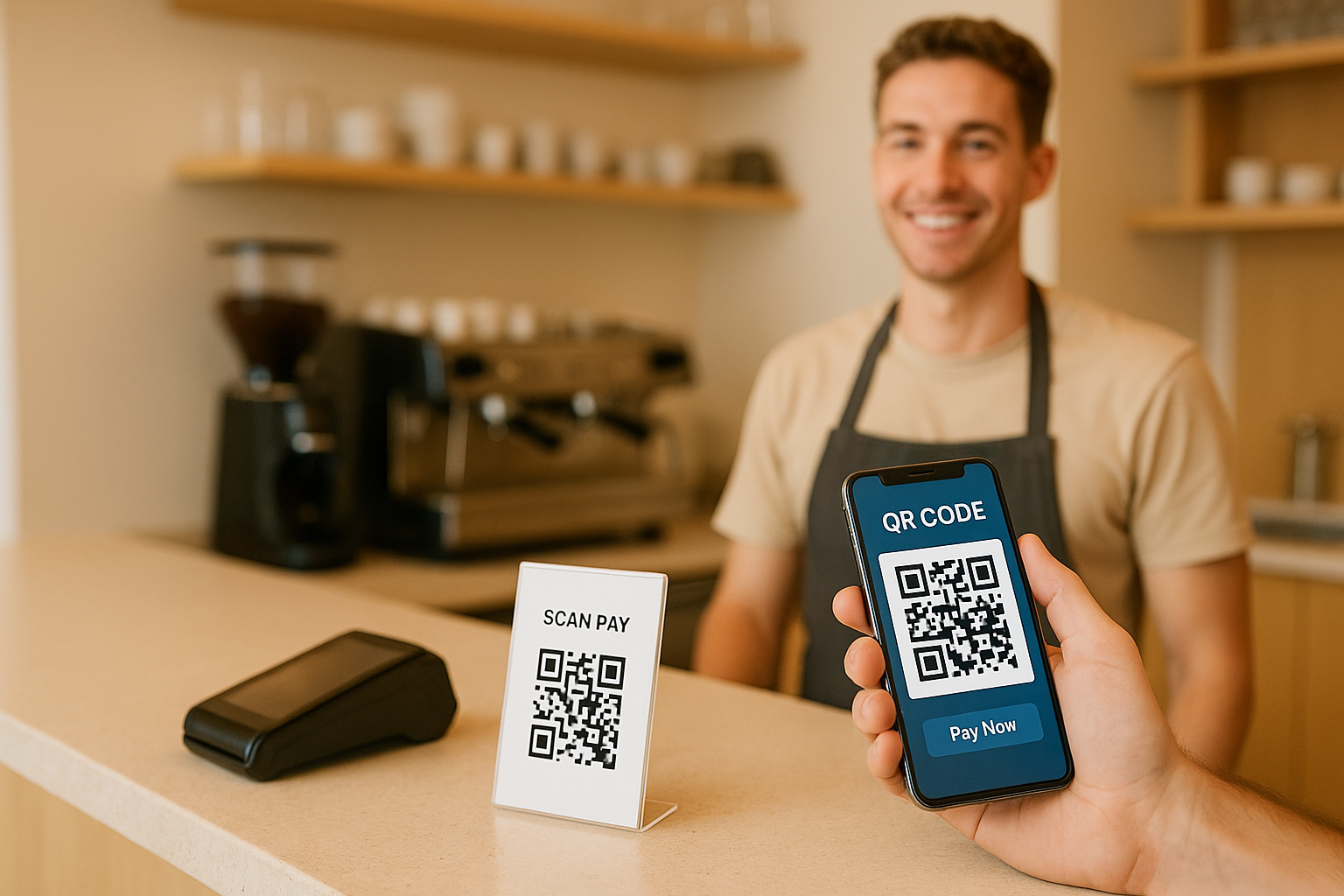
QR code payments are transforming how businesses handle transactions. By letting customers scan a code with their smartphone to pay, this approach offers faster, more secure, and simpler checkouts. It’s especially appealing for small businesses, as it eliminates the need for costly hardware like card readers and terminals. Here’s a quick look at the key benefits:
- Lower Costs: No expensive POS hardware needed; QR codes can be displayed on existing devices or printed.
- Quick Setup: Easy to implement with minimal technical requirements.
- Faster Checkouts: Transactions take seconds, reducing wait times and improving service flow.
- Improved Customer Experience: Familiar and easy-to-use process for customers.
- Higher Sales: Faster payments mean fewer abandoned purchases, both in-store and online.
- Enhanced Security: Encrypted, tokenized transactions reduce fraud risks.
- Versatility: Works across industries like retail, restaurants, and service providers.
QR code payments not only save money but also streamline operations while offering a smooth experience for customers. Whether you’re a café, a pop-up shop, or a professional service provider, this payment method can simplify your transactions and boost efficiency.
1. Lower Costs for Hardware and Transaction Fees
QR code payments offer a budget-friendly alternative to traditional point-of-sale (POS) systems by cutting out the need for expensive hardware. Card terminals alone can cost anywhere from $300 to $800 per device, and that’s before factoring in extras like receipt printers ($150–$400) and cash drawers ($100–$300). Altogether, a full POS setup can easily exceed $1,000. As the U.S. Chamber of Commerce highlights:
"No hardware [is] required: You can accept credit and debit card payments without a card reader or terminal."
This streamlined approach opens the door to significant financial savings.
Instead of investing in costly equipment, businesses can use existing smartphones or tablets to display or generate QR codes. Alternatively, static QR codes can be printed on menus, table tents, or invoices. Take a small café, for instance – they could avoid spending $1,500–$3,000 on traditional POS hardware by opting for a $300 tablet and some printed QR signs, drastically cutting startup costs.
Transaction fees are another area where QR code payments shine. Many providers offer competitive rates compared to standard card processing fees, which usually range between 2.6% and 3.5%. Some systems even take advantage of lower-cost payment rails or simpler fee structures, leading to additional savings on each transaction.
Beyond initial costs, QR code systems also reduce long-term expenses. There’s no need to worry about hardware maintenance, repairs, or upgrades. Software updates happen automatically, and scaling up is as simple as printing more QR codes. For businesses with multiple locations, these savings quickly add up.
Companies like Secured Payments make the transition even more appealing by allowing U.S. businesses to integrate QR code payments with their existing systems. This means businesses can keep using their current payment processor while relying less on hardware. Plus, Secured Payments sweetens the deal with hardware credits for new clients, making the switch nearly effortless and cost-effective.
2. Simple Setup and Faster Checkout
Setting up QR code payments is incredibly straightforward. Most businesses in the U.S. can get started by creating an account, linking their bank, and generating a QR code through a web dashboard or app. There’s no need to invest in extra hardware like card terminals or PIN pads – just print the QR code or display it on a smartphone, tablet, or existing POS screen. This simplicity makes it especially appealing for small and mid-sized merchants looking to accept QR payments without hassle.
The checkout process itself is lightning-fast. Customers simply scan the QR code with their camera or wallet app and confirm the payment with just two taps. This cuts out several steps compared to traditional card payments – no swiping or inserting cards, no waiting for terminal approvals, and no need for receipts to be printed or signed. What used to take tens of seconds now takes just a few, reducing wait times and speeding up service during busy periods.
In places like quick-service restaurants, coffee shops, and retail stores, this speed can make a huge difference. With QR codes, multiple customers can pay at the same time, eliminating the bottleneck of a single card terminal or cashier. For instance, a café can place QR codes on tables, allowing customers to order and pay directly without standing in line, which keeps service running smoothly during peak hours. Similarly, at events, pop-up shops, or farmers markets, displaying QR codes lets customers initiate payments on their own, helping staff manage lines more efficiently.
For businesses using payment providers like Secured Payments, adding QR code functionality can easily be integrated with their current credit card processing and merchant services. Merchants can use QR codes at physical checkout points or online, all while leveraging the same payment gateway and reporting tools they already rely on. This means no need to overhaul existing systems, making the transition seamless and efficient.
Faster transactions not only allow businesses to serve more customers per hour but also improve the overall experience. Customers can use their preferred payment apps without learning new systems, creating a smooth, familiar process that encourages repeat visits. Shorter lines, faster service, and happier customers – QR code payments truly deliver on all fronts.
3. Better Customer Experience with Known Technology
QR codes have become second nature for U.S. customers. Whether it’s checking out a restaurant menu, accessing event tickets, or grabbing a promotional deal, people already know how to use them. This familiarity makes paying with QR codes feel simple and intuitive, eliminating the need for a steep learning curve. All it takes is opening a camera or wallet app, pointing at the code, and confirming the payment. For shoppers who aren’t tech-savvy, this ease of use reduces stress, making checkouts smoother and encouraging repeat visits.
What’s more, QR payments don’t just simplify the process – they speed it up. Customers stay in control by keeping their card details on their own devices and approving payments with familiar methods like biometrics or passcodes.There’s no need to hand over a card, touch shared keypads, or fumble with cash. A quick scan and tap, and the transaction is done. QR payments take just seconds, compared to the 10–30 seconds often required for traditional card transactions. This boost in efficiency can increase throughput by up to 50% in busy settings. Post-pandemic, this speed and convenience matter more than ever – 83% of consumers now prefer contactless payment options like QR codes, which also lead to 20–30% higher satisfaction scores.
The benefits are especially clear in industries like hospitality and retail. Restaurants using QR codes on checks or table tents allow guests to pay whenever they’re ready, speeding up table turnover and leaving diners happier. Retailers that place QR codes at shelves or checkout stations empower shoppers to self-checkout with their phones, cutting down on lines and enhancing the perception of convenience. Even service-based businesses like law firms are seeing results by including QR codes on invoices or at reception desks, making it easier for clients to pay immediately and reducing the need for follow-ups.
Another advantage? Customers don’t need any extra tools or apps – most modern smartphones already have built-in camera scanning and wallet capabilities. This simplicity not only makes payments more convenient but also helps prevent abandoned transactions.
To further enhance this seamless experience, payment providers like Secured Payments can customize QR payment flows to align with a business’s branding, accommodate specialized needs, and ensure smooth operation even during peak times. Clear prompts like “Scan to pay securely” and straightforward totals (e.g., “Total: $27.45”) reassure customers and make the process feel effortless. When payments are this easy and familiar, customers leave with a positive impression – one that keeps them coming back.
4. Higher Sales and Fewer Abandoned Purchases
A faster checkout process leads to more completed purchases. QR code payments eliminate many of the hassles tied to traditional methods – like digging out cards, typing in long numbers, or waiting for a card reader. With just a quick scan on their smartphone, customers can approve payments instantly. This smooth experience works seamlessly for both in-store and online transactions.
Take physical locations like coffee shops, food trucks, or quick-service restaurants, for example. Long lines during busy hours can frustrate customers and cause them to leave without buying. By placing QR codes at counters, tables, or on receipts, businesses allow customers to pay at their convenience. This reduces abandoned purchases and keeps the line moving.
Online shopping benefits just as much. When a QR code appears at checkout, buyers can use their preferred banking or wallet app to finish the payment quickly and securely. This eliminates common roadblocks like filling out forms or manually entering card details, resulting in fewer drop-offs during checkout.
Service-focused businesses – think law firms, salons, or healthcare providers – also gain an edge. Adding QR codes to invoices or reception areas makes it simple for clients to pay immediately after receiving services. This not only saves staff time spent chasing payments but also ensures faster collections.
QR codes can even extend their usefulness beyond checkout. Businesses can include them on marketing materials, product packaging, or direct mail to create new sales opportunities. For merchants in the U.S. working with providers like Secured Payments, QR payment systems can also tie into loyalty programs, automatically apply discounts, and send instant digital receipts. These features not only encourage customers to complete their purchases but also promote repeat visits and higher average order values.
sbb-itb-8c45743
5. Better Security and PCI DSS Compliance
Security is often a sticking point for adopting new payment methods, but QR code payments bring a level of safety that stands out compared to traditional card transactions. When a QR code is scanned, users are directed to a secure payment page protected by encryption and tokenization. This means sensitive card details never pass through your systems, significantly lowering the risk of data breaches.
On top of protecting customer data, modern QR payment systems make regulatory compliance easier. These systems use encryption and tokenization to keep data secure during transmission, while authentication is handled through the customer’s banking or wallet app, often using biometrics like Face ID or fingerprint scanning.
For businesses in the U.S., meeting PCI DSS standards is non-negotiable, with non-compliance penalties reaching up to $100,000 per month. QR code payments simplify this process by keeping card data within the payment provider’s secure environment, reducing your PCI DSS scope. This often means you can complete shorter self-assessment questionnaires instead of undergoing full-scale audits. By working with a PCI DSS–compliant provider like Secured Payments, you can ensure your QR payment setup aligns with all card-network security requirements from day one.
Another advantage of QR payments is their contactless nature, which helps prevent risks like card skimming. Dynamic QR codes, which are unique to each transaction, make tampering nearly impossible. Retailers using these systems have reported zero incidents of skimming and a 25% reduction in disputes, highlighting the added layer of security.
6. Customer Data and Purchase Analytics
QR code payments don’t just improve security – they also provide valuable insights that can shape smarter business decisions.
When customers pay via QR codes, businesses gain access to detailed purchase data, such as items bought, transaction times, and spending amounts. Unlike cash, which leaves no trace, or basic card terminals that only log approval codes, QR payment systems can link transactions to item-level data. This includes timestamps, order values, and even customer profiles. With this information, you can identify your best-selling products, busiest hours, and most loyal customers – all without storing sensitive card details. It’s a data-driven approach that complements the cost-saving and speed advantages of QR payments.
This transaction data is often displayed in dashboards that highlight key metrics like total sales volume, transaction counts, average order values, and conversion rates. More advanced systems can break down revenue by product category, location, time of day, or payment channel (whether in-store or online). These insights help you spot trends, manage inventory more effectively, and evaluate the success of specific promotions in driving additional sales.
Connecting QR transactions to customer details – like names, emails, or phone numbers – opens the door to personalized marketing. You can create targeted offers, such as "10% off your fourth visit" or "$5 off your favorite drink", encouraging repeat business. Since QR payments are digital and timestamped, you can also schedule time-sensitive promotions, like happy hour discounts or weekday-only deals. Even receipts can be customized with promo codes tied to recent purchases, making your marketing efforts more precise and impactful.
To fully harness these insights, it’s crucial to integrate your QR payment system with existing platforms. Look for a provider that offers robust APIs or native integrations to sync key data fields – such as order IDs, customer IDs, item lists, and totals in U.S. dollars – across your systems. For instance, Secured Payments specializes in integrated payment solutions, ensuring QR payments flow seamlessly through the same backend used for card transactions. Their team can also advise on tracking the right metrics, segmenting customers effectively, and staying PCI DSS compliant while using payment data to enhance your marketing and operations.
Avoid pitfalls like failing to link transactions to customer identifiers or letting data sit in disconnected systems. Start with a clear data model that uses consistent product names, categories, and customer IDs. Regularly check your data for accuracy, including figures, dates, and currency formats, to ensure your analytics remain reliable and actionable.
7. Works for Different Business Types
QR code payments are a flexible option for a variety of businesses, from retail stores and restaurants to professional services and mobile vendors. They help reduce long lines and make it easy for customers to shop or pay on the go. For example, retail stores can place QR codes at checkout counters, on product displays, or even in storefront windows, allowing customers to pay instantly using their smartphones. This adaptability helps businesses keep up with changing market needs.
Restaurants and cafés can use table-specific QR codes to make dining more convenient. These codes let customers view menus, place orders, and pay without waiting for staff, speeding up service and improving the overall experience. Professional services – like law firms, accounting offices, and consultancies – can print QR codes on invoices, engagement letters, or at reception desks to encourage faster payments and reduce late bills.
Service businesses, such as repair technicians or mobile vendors, can carry a smartphone or tablet displaying a QR code, enabling secure, on-the-spot payments without traditional card readers. Logistics and delivery companies can include QR codes on invoices, delivery slips, or purchase orders, making it easy for clients to pay directly from their phones or computers, speeding up payment cycles.
Banks, fintech companies, and insurtech platforms are adding QR code features to their mobile apps. These allow users to pay bills, transfer funds, or handle premiums with a quick scan. This integration shows how QR code payments can scale across various industries.
For smaller businesses like microbusinesses, pop-up shops, and food trucks, standalone QR solutions are a great fit. They require minimal hardware – just a smartphone and a payment provider account – and can handle secure payments through major card networks or digital wallets. These systems also support USD pricing, U.S. tax receipts, and PCI DSS–compliant processing when used with a compliant provider.
QR code systems can also integrate with existing POS systems, e-commerce platforms, and accounting tools via APIs. For instance, a physical store’s POS system might generate a unique QR code for each transaction, which includes details like the total amount and tax. Once the payment is made, the system automatically marks the order as paid and updates inventory. Online stores can use QR codes at checkout or in follow-up emails, letting customers complete payments directly through mobile banking apps.
Conclusion
QR code payments offer U.S. businesses an effective way to save money, speed up transactions, and enhance customer experiences. By cutting down on the need for pricey POS equipment and potentially lowering transaction fees, QR codes empower small retailers, restaurants, and service providers to improve their profit margins. Quicker payments mean better cash flow, less hassle with collections, and the ability to serve more customers in less time.
These transactions rely on established card networks and incorporate encryption, tokenization, and biometric authentication, ensuring they align with PCI DSS standards. The familiar, contactless process minimizes checkout friction and helps reduce cart abandonment, both in-store and online, fostering customer satisfaction and loyalty.
QR payments are versatile, working across various industries and channels. Whether displayed at checkout, printed on invoices, embedded in emails, or integrated into POS and e-commerce systems, they adapt to different business needs. Companies can start small – targeting a single high-friction area – evaluate customer feedback, and gradually expand without needing a complete system overhaul. This adaptability makes it easy to implement and scale.
For businesses looking to get started, providers like Secured Payments offer tailored solutions, including credit card processing, e-commerce support, and consulting services. With perks like guaranteed low rates, hardware credits for new clients, and 24/7 customer support, they simplify the process of adopting QR code payments. As they put it:
"We work with you to build a flexible strategy that scales with your efforts, and goes far beyond the basic requirement of accepting payments." – Secured Payments
Ready to cut costs and improve service? Schedule a consultation to explore how QR code payments can elevate your customer experience and deliver measurable results.
FAQs
How do QR code payments make transactions more secure for businesses?
QR code payments enhance transaction security by removing the need for physical card swipes or manual data entry. This approach minimizes the chances of card skimming and fraudulent activities. With payment information encrypted and transmitted digitally, both businesses and customers gain stronger protection against data breaches and unauthorized access. The result? A smoother and safer payment experience for everyone involved.
Which types of businesses benefit the most from using QR code payments?
QR code payments are a game-changer for small businesses like startups, retail stores, restaurants, cafes, and service-based operations such as salons or repair shops. These businesses often thrive on quick, easy, and budget-friendly payment options to improve customer satisfaction and simplify their transaction processes.
Using QR code payments eliminates the need for costly hardware, shortens checkout times, and offers customers a sleek, contactless payment experience that feels modern and hassle-free.
Can businesses integrate QR code payments with their current systems?
QR code payments can easily fit into your current business systems. Many payment providers offer integrated solutions that enable QR code transactions to sync with your existing setup. This ensures hassle-free payment processing, making it easier to handle transactions while allowing room for growth as your business expands.